

Why Woodfired Pizza Tastes Better: The Science of the Perfect Slice
Most people think those dark, bubbly spots on a crust are just a sign of a distracted chef; yet, in the world of artisan baking, that "leopard spotting" is the hallmark of a scientific masterpiece. It is the defining reason why woodfired pizza tastes better than any mass-produced alternative pulled from a standard electric deck. While commercial chains often serve up bland, doughy bases that lack character, a true woodfired oven uses a complex dance of heat to create something entirely different.
We have all experienced the disappointment of a soggy takeaway crust that loses its integrity before it even hits the table. You deserve a meal that encourages lingering and savouring rather than a rushed, forgettable snack. In this guide, we will uncover the culinary secrets and the precise physics of heat that produce a superior crust and a richer flavour profile. We are exploring the "triple threat" of thermal radiation, convection, and conduction to show you exactly how science creates the perfect slice.
Key Takeaways
Understand how 400-degree temperatures and thermal mass create a crisp, structured base that avoids the disappointment of a soggy takeaway crust.
Discover the chemical magic of the Maillard reaction and why woodfired pizza tastes better when it features the signature "leopard spotting" of a perfectly charred crust.
Learn why dense Australian hardwoods like ironbark provide delicate aromatics and a depth of flavour that conventional electric ovens simply cannot replicate.
Explore how high-intensity heat sears fresh toppings to retain their vibrant colour and texture, creating a silky emulsion of fior di latte and olive oil.
Find out how Cedar & Stone combines these scientific principles with Amalfi traditions to serve as Wellington Point's premier destination for artisanal craft.
Table of Contents
The Science of Extreme Heat: Why 400 Degrees Matters
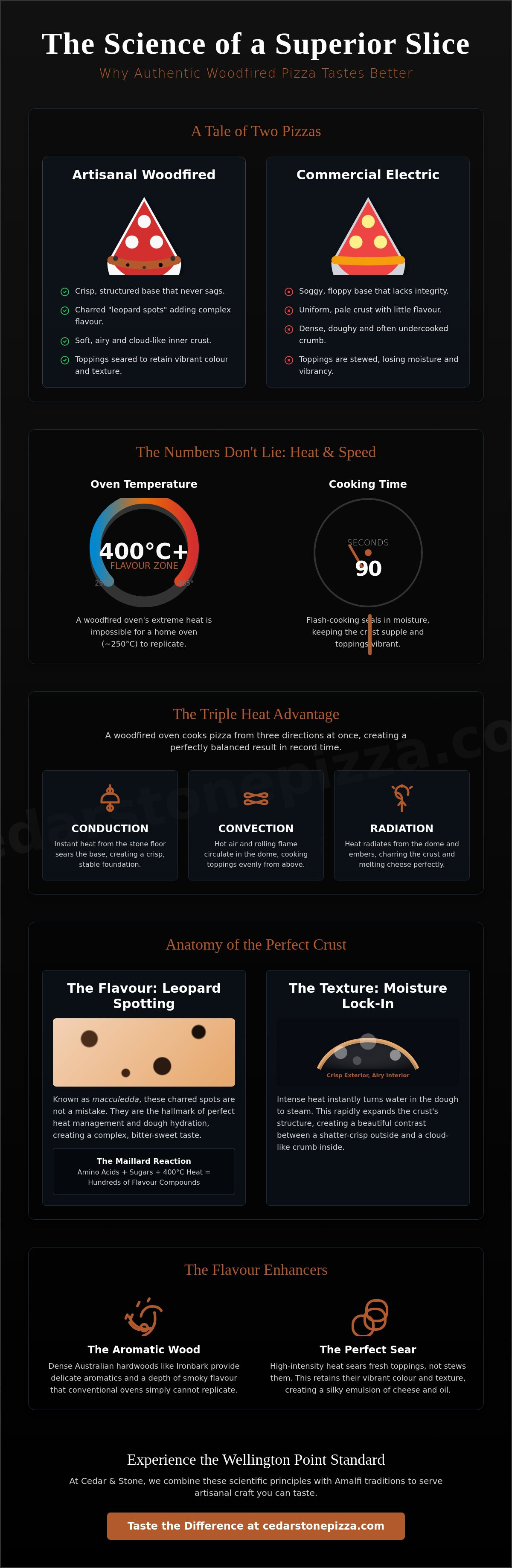
Heat is the soul of the craft. While a standard kitchen oven in an Australian home might struggle to reach 250 degrees Celsius, a professional woodfired dome operates in a different atmosphere entirely. Understanding why woodfired pizza tastes better begins with this simple, searing truth: temperature is everything. To achieve the standards of a traditional Neapolitan pizza, the oven must hover between 400 and 485 degrees Celsius. This massive temperature gap is the primary reason why commercial deck ovens often produce a crust that feels more like a biscuit than a piece of artisanal bread.
Then there is the concept of thermal mass. The stone base of the oven acts like a massive battery, storing immense amounts of energy from the burning hardwood. When the dough hits that floor, the energy transfer is instantaneous. This immediate surge of heat creates a crisp bottom that can support its own weight, a feat that slower, cooler ovens rarely manage without turning the dough into a dry cracker. It is a level of structural integrity you can feel with every bite.
Speed is the final piece of the puzzle. In our kitchen, the 90-second rule is king. By flash-cooking the pizza at such extreme intensity, we seal the moisture within the dough before it has a chance to evaporate. It’s a race against time that ensures the toppings stay vibrant and the base remains supple. This rapid process is a core reason why woodfired pizza tastes better, as it preserves the integrity of every ingredient rather than stewing them in a slow, dry heat.
Conduction, Convection, and Radiation
A woodfired oven hits the pizza from three directions at once. Conduction happens where the dough touches the stone floor, while convection occurs as the rolling flame follows the curve of the dome, creating a constant current of superheated air that moves over the toppings. Thermal radiation in a woodfired oven is the invisible energy that radiates from the glowing embers and the superheated dome, penetrating the pizza from above to cook toppings and char the crust simultaneously. This 360-degree assault ensures the pizza is cooked through perfectly in less than two minutes.
The Moisture Lock-In Effect
The result of this extreme environment is a fascinating scientific phenomenon. The intense heat causes the water in the dough to turn into steam almost instantly, which expands the cellular structure of the crust to create a soft, airy interior. This creates a beautiful contrast between a shatter-crisp exterior and a cloud-like crumb. Achieving this balance is physically impossible at lower temperatures, where the dough slowly dries out, losing that coveted suppleness that defines a premium woodfired experience.
Leopard Spotting: The Secret Flavour in the Char
To the uninitiated, those small, dark blisters on the edge of a crust might look like a kitchen mishap. To a connoisseur, they are known as macculedda, or leopard spotting. These tiny circles of intense char are the visual proof of a masterfully managed fire and a high-hydration dough. They represent the peak of flavour development, offering a complex, bitter-sweet contrast that balances the richness of the cheese and the acidity of the tomato. This intricate pattern is one of the most visible reasons why woodfired pizza tastes better, as it signals a chemical transformation that a cooler, slower oven simply cannot trigger.
The magic behind these spots is the Maillard reaction. This is the science of building flavor through the interaction of amino acids and reducing sugars under intense heat. While a standard oven might eventually brown the dough, the 400-degree environment of a woodfired dome accelerates this process to a point of near-sublimation. It creates hundreds of different flavour compounds that give the crust its nutty, toasted, and earthy notes. When you visit our Wellington Point pizza bar, you can see this artistry in every slice that leaves the oven.
It is important to distinguish this artisanal char from being "burnt." While carbonised dough provides a smoky depth, an actually burnt pizza is acrid and dry. True leopard spots occur only on the cornicione, the puffy outer rim. This edge acts as a protective barrier, keeping the interior of the dough soft and airy while the very surface undergoes a rapid, intense caramelisation. This creates a sophisticated profile that commercial chains, with their uniform golden-brown bases, can never replicate.
The Maillard Reaction at 400 Degrees
High heat is the catalyst, but time is the secret ingredient. We use slow-fermented dough because the long proofing process breaks down complex starches into simple sugars. These sugars are what react so violently and beautifully at 400 degrees. This combination of biological patience and thermal intensity is why woodfired pizza tastes better; it develops a depth of flavour that quick-rise doughs lack. The result is a crust that isn't just a vessel for toppings, but a gourmet component in its own right.
Texture as a Component of Taste
Flavour isn't just about the tongue; it's about the ears and the touch. The varied texture of a woodfired base, from the shatter-crisp bubbles to the tender, chewy interior, creates a more satisfying sensory experience. This is best demonstrated by the "fold test." A traditional slice should be firm enough to hold its shape when folded, yet supple enough not to snap. This structural harmony, combined with the audible crunch of the char, enhances our brain's perception of the fats and salts in the toppings, making every bite feel more indulgent.
Wood vs. Regular Ovens: A Flavour Comparison
There is a persistent debate in culinary circles regarding whether a 90-second cook time is truly enough for smoke to influence the dough. While critics argue that smoke needs hours to penetrate proteins, they often overlook the role of aromatics. In a woodfired dome, the pizza is not being "smoked" in the traditional sense; rather, it is being kissed by the volatile organic compounds released from the timber. This subtle infusion of earthy notes and toasted oak is a primary reason why woodfired pizza tastes better than anything produced by a sterile electric element.
In Australia, the choice of timber is vital. We rely on dense hardwoods like Ironbark because they burn exceptionally clean and provide a steady, intense heat. These timbers don't just provide fuel; they contribute to the "breath" of the oven. As the wood combusts, tiny particles of ash and essential oils circulate within the convection current, settling delicately on the moist surface of the dough. This creates a profile with character and soul, contrasting sharply with the mechanical, one-dimensional output of a commercial conveyor oven.
The Woodfired Advantage
To understand the technical gap, we must look at how different heat sources interact with the ingredients. While a conveyor oven offers the cold comfort of mechanical consistency, it lacks the nuance of a live flame. The following table illustrates the stark differences in the cooking environment:
Why Regular Ovens Make Soggy Pizza
The greatest enemy of a perfect slice is the "stewing" effect. In a conventional home oven or a low-temp commercial deck, the heat isn't intense enough to flash-evaporate the moisture in the vegetables and cheese. Instead of searing, the toppings release their water onto the base, leading to the dreaded soggy centre. Even with a domestic pizza stone, the lack of overhead radiant heat means the top of the pizza takes too long to cook.
Scientific research into how cooking creates flavor confirms that high-velocity heat transfer is essential for the chemical changes that define gourmet food. Without the unique airflow of a woodfired dome, the moisture is trapped, and the sugars in the dough never reach the point of complex caramelisation. This fundamental difference in physics is exactly why woodfired pizza tastes better; it transforms the cooking process from a slow bake into a high-energy culinary event.
Elevating the Toppings: How Heat Sears, Not Stews
Heat can be a blunt instrument or a delicate tool. In a conventional oven, the low temperature and stagnant air often lead to a "stewing" effect, where vegetables limp under their own moisture and meats become leathery. In contrast, the 400-degree environment of a woodfired dome acts as a high-intensity sear. This immediate searing of ingredients is a fundamental reason why woodfired pizza tastes better, as it locks in the natural juices of the toppings while creating a complex exterior texture. Capsicum and red onion retain their vibrant colour and a satisfying "snap," while mushrooms are roasted to an earthy concentrate rather than turning into a rubbery mess.
The science of the perfect slice also involves a process called fat emulsification. At these extreme temperatures, the moisture from the fior di latte mozzarella and the fats from the extra virgin olive oil don't just sit on top of the dough. They meld together. This high-heat interaction creates a silky, unified sauce that coats the palate, a phenomenon that is physically impossible to achieve at the lower temperatures of a domestic oven. It is the difference between a pizza that feels oily and one that feels truly indulgent.
Meats undergo a similar transformation. Whether it is a spicy pepperoni or a delicate prosciutto, the radiant heat from the dome crisps the edges in seconds. This allows the fats to render and caramelise without the meat drying out completely. Because the cooking process is so rapid, it also preserves more of the delicate nutrients and antioxidants found in fresh produce, ensuring that the flavour remains bright and authentic. If you are ready to experience this scientific harmony for yourself, explore our woodfired menu and see how our oven elevates every ingredient.
The Transformation of Tomato and Cheese
The sauce and cheese are the heart of the experience. A San Marzano style tomato base is naturally acidic and bright; under the intense heat of a wood fire, it reduces and sweetens almost instantly. This concentrates the natural sugars without the need for additives. Meanwhile, high-quality mozzarella doesn't just melt into a flat pool; it blisters and browns in patches, creating a varied landscape of flavour. To preserve the delicate aromatics of fresh basil, we add it at the final possible moment, ensuring it wilts into the cheese rather than burning into a bitter ash.
The Scent of the Bake
Savouring a meal begins long before the first bite. The psychological impact of smelling a wood fire is profound, as it triggers a primal response that prepares the digestive system for a high-quality meal. The aroma of toasted grain, bubbling cheese, and the subtle scent of Australian hardwood creates a narrative of craft and care. This sensory anticipation actually changes the physical taste experience, as your brain is already primed to detect the complex, smoky notes that signify why woodfired pizza tastes better than any mass-produced alternative.
The Wellington Point Standard: Woodfired Pizza at Cedar & Stone
Wellington Point has long been a sanctuary for those who appreciate the finer things in a relaxed, coastal setting. At Cedar & Stone Woodfired Pizza Bar, we have anchored this local lifestyle with a commitment to the Amalfi tradition, bringing world-class culinary standards to the Brisbane bayside. Our woodfired oven is the literal and metaphorical heart of the restaurant. It is a place where the physics of 400-degree heat meets the soul of artisanal baking. This unwavering dedication to the craft is precisely why woodfired pizza tastes better here; we don't just cook food, we curate a social experience rooted in quality.
The Cedar & Stone Woodfired Pizza Bar difference lies in our refusal to take shortcuts. While commercial chains prioritise volume and speed, we prioritise the "triple threat" of heat transfer that defines a perfect slice. Our kitchen is organised with the precision of a laboratory but the warmth of a family backyard. Every pizza that slides across the stone floor is a testament to our passion for the craft, designed to be enjoyed in a space that encourages you to unwind and savour the moment.
Artisan Methods in the Redlands
The journey to the perfect char begins 48 hours before the oven is even lit. We utilise a slow fermentation process for our dough, allowing the natural flavours to develop and the starches to break down into the simple sugars required for that iconic leopard spotting. This patience ensures that every base is light, airy, and digestible. Our kitchen team manages the live fire with expert care, ensuring that every pizza hits the table at its absolute peak of freshness. It is a sophisticated approach to local dining that makes world-class quality accessible to our Redlands neighbours.
The Perfect Pairings
A scientific masterpiece deserves a worthy companion. The delicate saltiness of a woodfired crust and the rich emulsion of fior di latte are perfectly complemented by a crisp, cold draught beer. We often recommend a Heads of Noosa lager, as its clean finish cuts through the richness of the char beautifully. For those seeking something more evocative, our signature cocktail list is designed to match the smoky, earthy notes of our pizzas. Whether you are sitting in our beer garden or lingering at the bar, the combination of premium craft and local hospitality is unmatched. To experience this for yourself, book your table at Cedar & Stone Woodfired Pizza Bar and taste the science of the perfect slice today.
Experience the Science of Savour
The 400-degree heat and our 48-hour fermentation process aren't just technical details; they are the foundation of a superior meal. This unique blend of thermal physics and culinary patience explains exactly why woodfired pizza tastes better than any conventional alternative. It is the defining reason for that unmistakable contrast between a shatter-crisp char and a cloud-like, airy crumb. By choosing artisanal methods over commercial convenience, we ensure every slice is a sophisticated celebration of flavour and texture.
We invite you to experience this scientific harmony in a setting that feels like home. At Cedar & Stone, our modern pizzas are inspired by the timeless traditions of the Amalfi Coast, served alongside a crisp draught in our Heads of Noosa Beer Garden. It is the perfect place to unwind, linger over a drink, and enjoy the ultimate bayside vibe with your neighbours. Secure your table at Wellington Point’s favourite woodfired pizza bar and discover the perfect slice today. We look forward to welcoming you to the heart of the Redlands soon.
Frequently Asked Questions
Is woodfired pizza actually healthier than regular pizza?
Woodfired pizza is often considered a healthier alternative because the rapid cooking process preserves more nutrients in the fresh toppings. Since the pizza spends less than two minutes in the oven, the vitamins and minerals in the vegetables don't have time to break down as they would during a long, slow bake. Additionally, artisanal dough typically avoids the hidden sugars and preservatives frequently found in commercial chain bases.
What is the best wood for a woodfired pizza oven in Australia?
Ironbark is widely regarded as the premier choice for woodfired ovens in Australia due to its incredible density and clean-burning properties. It provides the consistent, intense heat required to reach 400 degrees Celsius without producing excessive or acrid smoke. Other local hardwoods like Grey Box are also excellent, provided they are well-seasoned to ensure a low moisture content for a soot-free burn.
Why does woodfired pizza have black spots on the crust?
Those iconic black spots, known as leopard spotting or macculedda, are a result of high-heat caramelisation on a cold-fermented dough. They indicate that the sugars and proteins have reacted perfectly under intense radiant heat. This characteristic is a major reason why woodfired pizza tastes better, as it provides a complex, smoky depth that balances the creamy mozzarella and acidic tomato sauce.
Can you get a woodfired taste in a home oven?
Achieving a true woodfired profile in a domestic oven is nearly impossible because home appliances rarely exceed 250 degrees Celsius. While a heavy pizza stone or steel can help improve the bottom crust, you lack the rolling flame and the 400-degree ambient temperature. You won't get the same shatter-crisp texture or the aromatic infusion that comes from burning dense Australian hardwoods.
Why is woodfired pizza usually served in a smaller size?
The traditional 11 or 12-inch size ensures that the thin, delicate crust can be cooked evenly and quickly by the oven's radiant heat. If the pizza were much larger, the centre would often become soggy before the edges could properly char. This smaller footprint allows for a more focused heat transfer, ensuring every bite maintains its structural integrity and artisan flavour.
Does woodfired pizza have more calories than oven-baked?
Woodfired pizza generally contains fewer calories than mass-produced versions because the dough is made from simple, natural ingredients without added fats or oils. The high heat also means less oil is needed on the baking surface. While the total calorie count depends on your choice of toppings, the artisanal base is typically lighter and more digestible than a doughy commercial crust.
What makes a Neapolitan pizza different from a woodfired one?
Neapolitan pizza is a specific, regulated style of craft, whereas woodfired refers simply to the method of cooking. To be truly Neapolitan, a pizza must follow strict rules regarding flour type, tomato origin, and hand-kneading techniques. While all authentic Neapolitan pizzas are woodfired, not every woodfired pizza follows these specific Italian traditions. This distinction is part of why woodfired pizza tastes better when it's handled by a knowledgeable pizzaiolo.
Why does woodfired pizza get cold faster?
Woodfired pizza tends to cool more quickly because of its thin crust and high-hydration, airy interior. The very qualities that make it delicious, such as the light crumb and thin base, mean it has less thermal mass to retain heat once removed from the oven. This is why we encourage guests to enjoy their slice the moment it leaves the dome for the best possible experience.


Comments